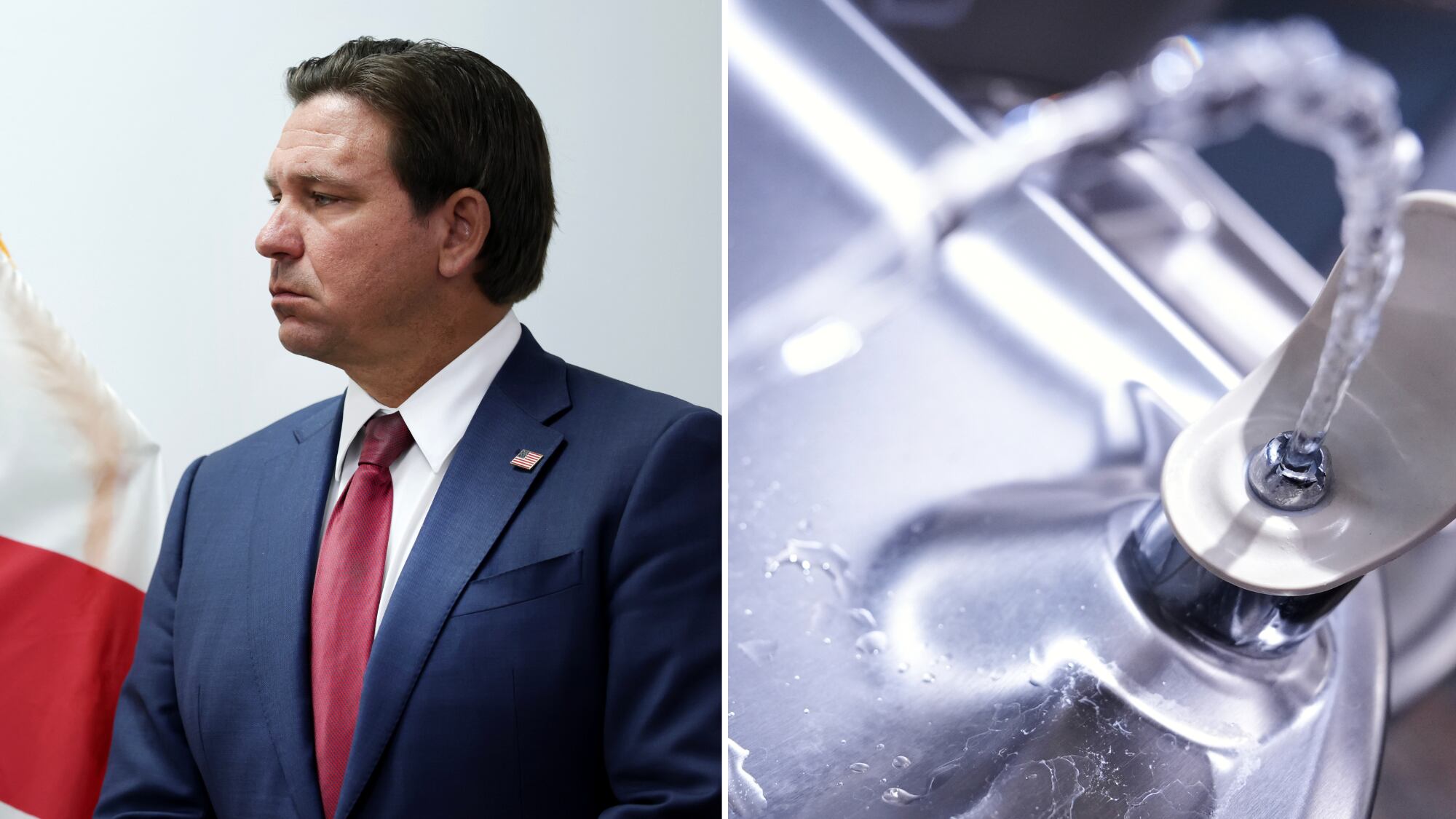
Florida Gov. Ron DeSantis signed a bill banning fluoride in public water systems on Thursday, making his state the second to prohibit the use of such additives in public water supplies. The ban will go into effect on July 1.
The Florida Farm Bill (SB 700) does not specifically say "fluoride" should be banned, but that "the use of certain additives in a water system" is now prohibited.
DeSantis has made it clear he planned to sign the bill into law, calling the use of fluoride in public water systems a "forced medication."
"Some people think they know better than you," he said at the bill signing, "that they should decree how you live your lives."
The bill passed the Florida House on April 29 and the Senate on April 16. Supporters argued that fluoride does not actually improve water quality and that discontinuing its use could save local governments money. However, the 27 representatives who voted against the bill emphasized the importance of fluoride for dental health.
Utah's Gov. Spencer Cox, who is also a Republican, signed a similar bill in late March that prohibits any citizen or government entity from adding fluoride to the state's water systems, which will go into effect on May 7. Similar legislation is currently making its way through other states, including Kentucky and Nebraska.
What is fluoride?
Fluoride is a naturally occurring mineral that can repair and prevent damage to teeth caused by bacteria in the mouth from eating or drinking, according to the Centers for Disease Control and Prevention (CDC).
Fluoride acid dissolves minerals on the tooth’s surface that can make it weaker and can reduce the likelihood of cavities and tooth decay.
Almost all water contains some levels of naturally occurring fluoride, the CDC reports, but the natural levels are too low to make much of a protective impact on teeth.
Why is fluoride in our drinking water?
The CDC has named the fluoridation of drinking water one of the 10 greatest public health interventions of the 20th century because of how much it impacted tooth health in the U.S.
In the 1930s, researchers observed that certain communities had significantly less dental decay than others because fluoride was more naturally present in their drinking water. In 1962, the U.S. Public Health Service (PHS) recommended that fluoride be added to community water supplies.
Today, PHS recommends the optimal fluoride concentration is 0.7 milligrams per liter of water. CDC data estimated in 2024 that more than two-thirds of the U.S. population has access to fluoridated drinking water.
Read more from Yahoo Life: There's a lot of misinformation about fluoride. Here's what experts want you to know.
Why do some people want fluoride banned?
Fluoride in drinking water has been the subject of several unproven conspiracy theories over whether it is helpful, dangerous or an unnecessary expense for local and state governments.
During the Florida House session on April 29, lawmakers who supported the Florida Farm Bill argued that fluoride does not improve water quality or dental health, despite what major public health groups like the CDC have said.
These conspiracies about fluoride were supported and amplified in early April when the U.S. Health and Human Services Secretary Robert F. Kennedy Jr. said he planned on telling the CDC to stop recommending putting fluoride in drinking water. Kennedy has previously referred to fluoride as "industrial waste," and in April, he gutted the CDC's oral health division, which was responsible for promoting the benefits of community water fluoridation.
Kennedy, who oversees the CDC, cannot issue a nationwide ban on fluoride, but he can tell the CDC to stop recommending it, Yahoo News reported. He can also ask the CDC to work with the Environmental Protection Agency (EPA), which is responsible for setting the standards and limits for fluoride under the Safe Drinking Water Act.
Read more from Yahoo News: RFK Jr. plans to tell CDC to stop recommending fluoride in drinking water despite pushback from health experts. Why is it so controversial?