This story was originally published on mynorthwest.com.
Microsoft said it will pay its own way as the artificial intelligence (AI) boom drives massive energy demands across the country.
The company announced Tuesday that it will absorb higher utility rates and cover grid upgrade costs in communities where it builds AI data centers — a move aimed at preventing local residents from footing the bill.
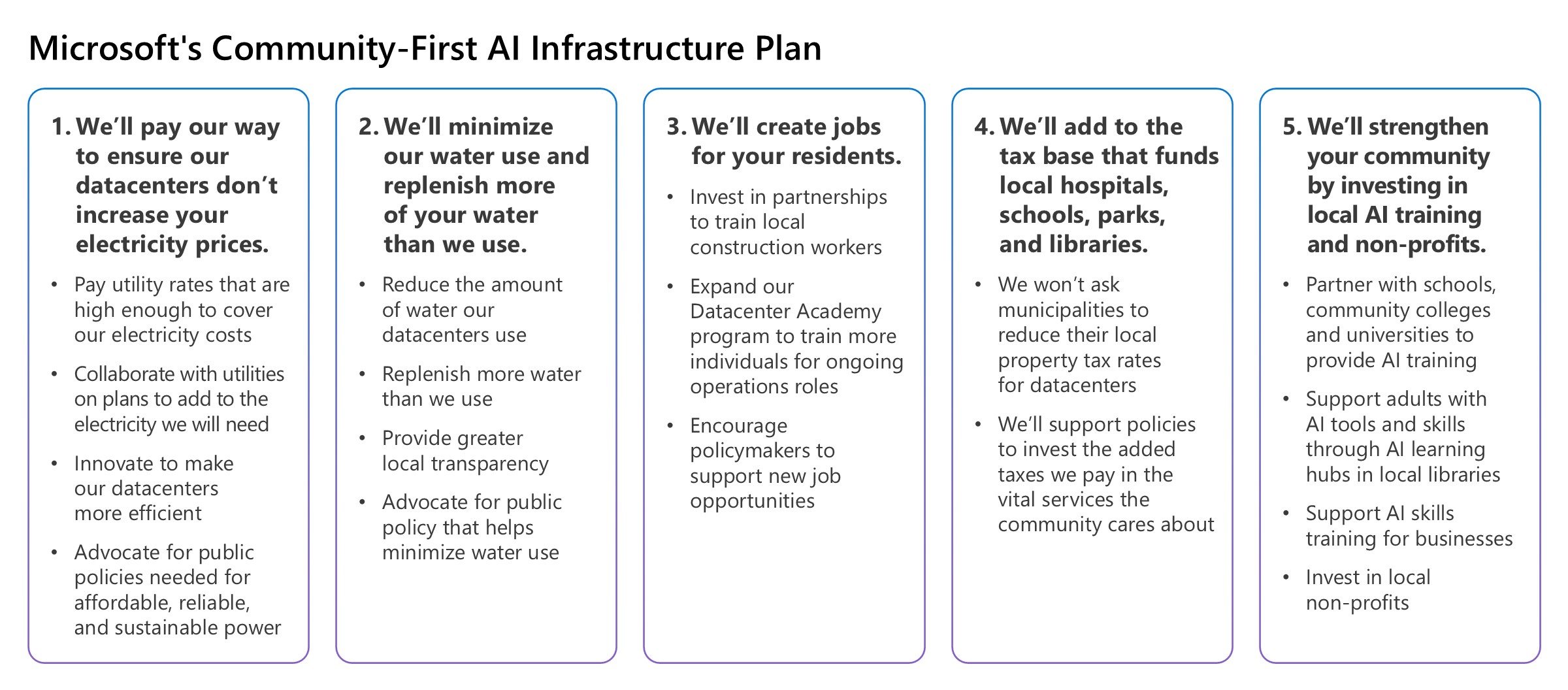
The pledge is part of Microsoft’s new five-point strategy, called “Community First AI Infrastructure.”
“Successful infrastructure buildouts will only progress when communities feel that the gains outweigh the costs,” Brad Smith, Microsoft vice chair and president, said.
Under the plan, Microsoft will pay for the electricity its data centers consume and fund upgrades to local grids to avoid passing costs on to households.
“We’ll collaborate early, closely, and transparently with local utilities to add electricity and the supporting infrastructure to the grid when needed for our datacenters,” Smith wrote.
Reducing water use
The company is also committed to reducing water use intensity by 40% by 2030.
“We’ll minimize our water use and replenish more of your water than we use,” Smith said.
Job creation is another pillar of the initiative. Microsoft plans to partner with North America’s Building Trades Unions and other organizations to train local workers for construction and operational roles.
Microsoft will also pay full local property taxes without seeking tax breaks. Additionally, the company will invest in AI education and training programs to prepare communities for the emerging AI economy.
Microsoft plans to begin implementing the initiative in the first half of 2026, starting in the U.S. Citing forecasts from the International Energy Agency, the company noted U.S. data center electricity demand could more than triple by 2035.
©2026 Cox Media Group