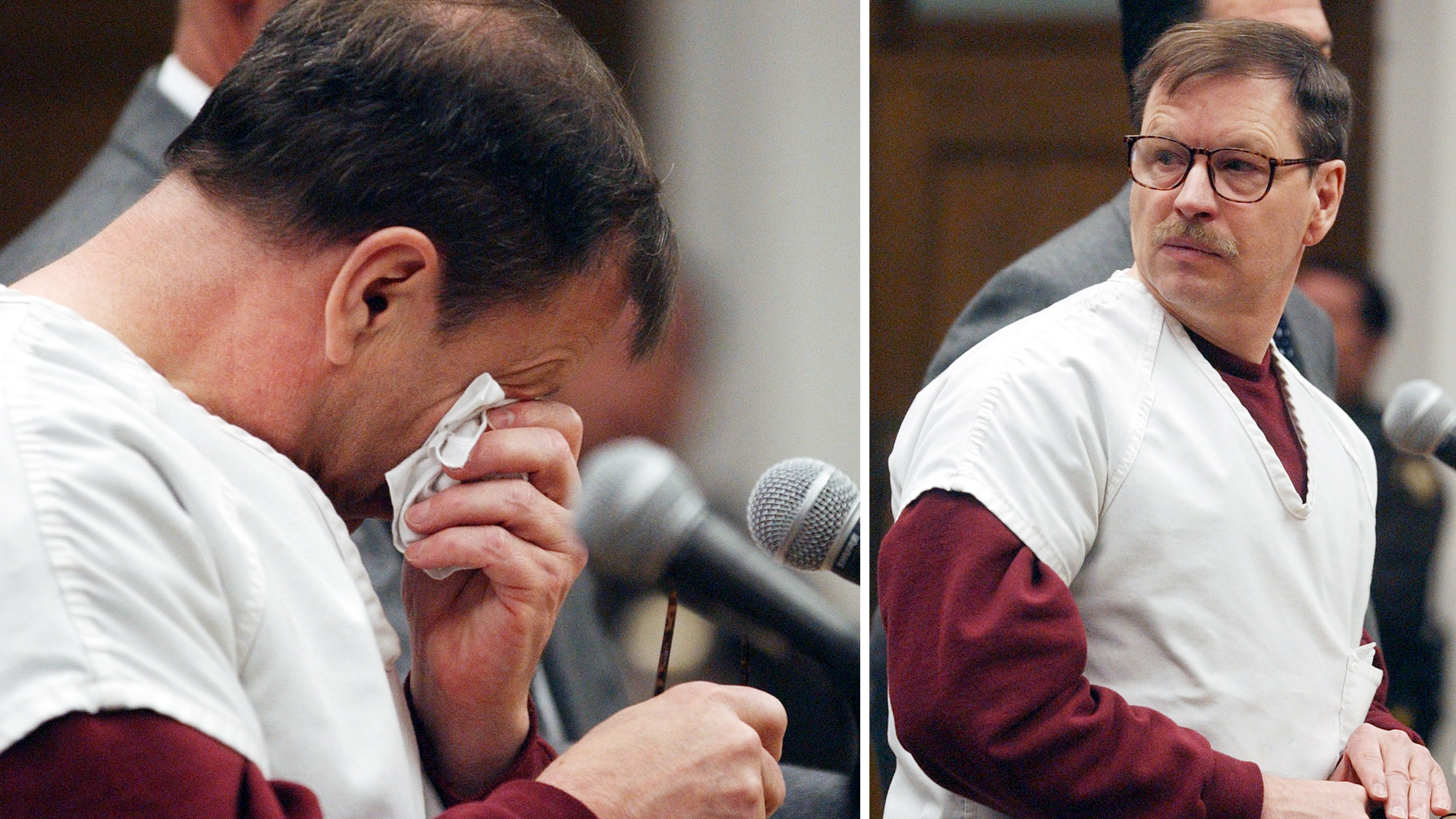
In 2003, one of America’s most prolific serial killers made a deal that spared his life.
Gary Ridgway, known as the Green River Killer, is Washington’s worst mass murderer.
Investigators believe he took the lives of around 80 women, terrorizing King County in the 1980s and 1990s.
In 2003, he accepted a plea deal that prevented him from receiving the death penalty.
He received a life sentence in exchange for a detailed confession about the murders of 48 women. He also agreed to help locate victims’ remains.
Ridgway preyed mostly on prostitutes, drug addicts, and young runaways. Investigators say he had sex with his victims and would then strangle them and dump their bodies in wooded areas – or the Green River.
Legal experts said the plea bargain with the Green River Killer raised a pertinent question: If Washington wasn’t going to execute someone who confessed to murdering 48 people, how could the state ever again put anyone to death?
Fifteen years later, in 2018, Washington state’s Supreme Court ruled that the death penalty was unconstitutional, but Ridgway’s case didn’t have anything to do with that. In State v. Gregory, the Washington Supreme Court decided that it was applied in an arbitrary and racially discriminatory manner. You can read the pleadings filed in the Washington Supreme Court here.
At the time, Death-row prisoners in Washington were able to choose if their execution would be carried out by lethal injection or hanging. If the prisoner made no decision, the default method was lethal injection, according to the Death Penalty Information Center.
The state later eliminated the death penalty from law in 2023.
Washington state has carried out five executions since the US Supreme Court reinstated capital punishment in 1976, according to data from the Death Penalty Information Center. The last one was in 2010.
©2025 Cox Media Group