LONGVIEW, Wash. — The chemical tank at the center of the deadly implosion in Longview was found to be unsafe before the blast, according to a report released by the U.S. Chemical Safety and Hazard Investigation Board (CSB).
The implosion happened in May, and 11 people died.
READ: Who were the victims of the Longview deadly implosion
Tank inspections
The federal report released Friday says Nippon Dynawave Packaging Company (NDP) had the G Tank inspected in July 2025, 10 months before the incident. The results of the inspection showed significant thinning below the minimum safe thickness in the lower regions of the tank.
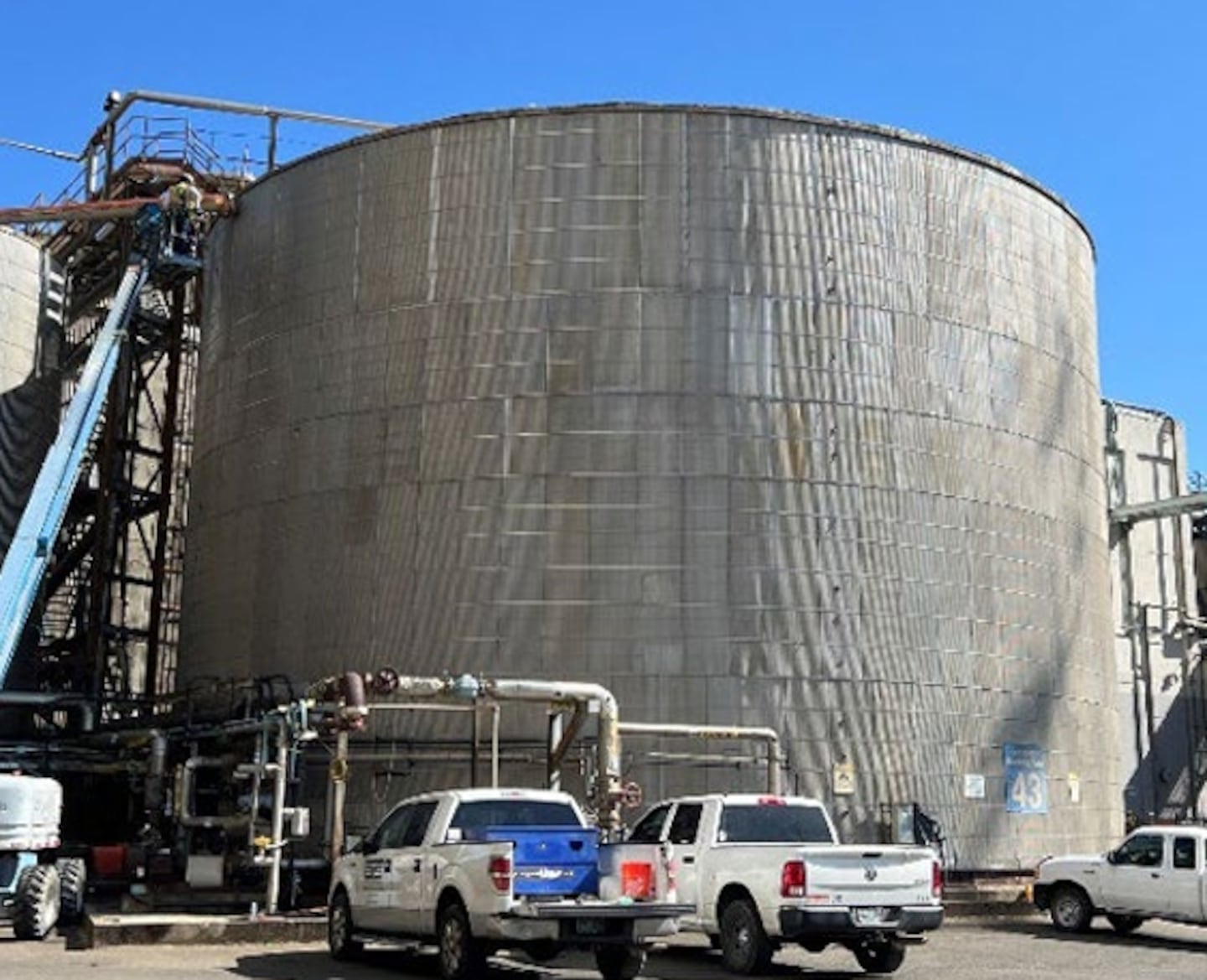
The inspection contractor stated that the tank was “[n]ot fit for continued service” unless it was repaired and that there was a “[h]igh likelihood/consequence of failure.”
According to the report, Nippon Dynawave Packaging Company scheduled additional inspections while continuing to operate the tank normally. The same inspection contractor looked at the tank two more times: in October 2025 and February 2026. Both inspections were external thickness inspections, and both identified that large portions of the tank were too thin.
The report states that Nippon Dynawave Packaging Company did not internally inspect the tank, make any repairs, or scale back the use of it before the implosion.
Day of the incident: What happened?
The report also detailed more about what happened the day of the deadly implosion.
On Tuesday, May 26, 2026, at around 1:55 a.m., the mill’s digestor had an unexpected problem called a process upset. Operators had to take it offline so it could be repaired.
A digestor is a major piece of equipment used in the pulping process. Normally, white liquor is fed into the digestor to help break down wood chips into pulp.
According to the report, workers reduced the amount of white liquor being sent to the digestor and by 4:08 a.m. they completely shut off the flow.
While white liquor was no longer leaving G Tank, more white liquor was still being produced upstream, according to the report, which meant the tank rose to about 90% full by 6:22 a.m.
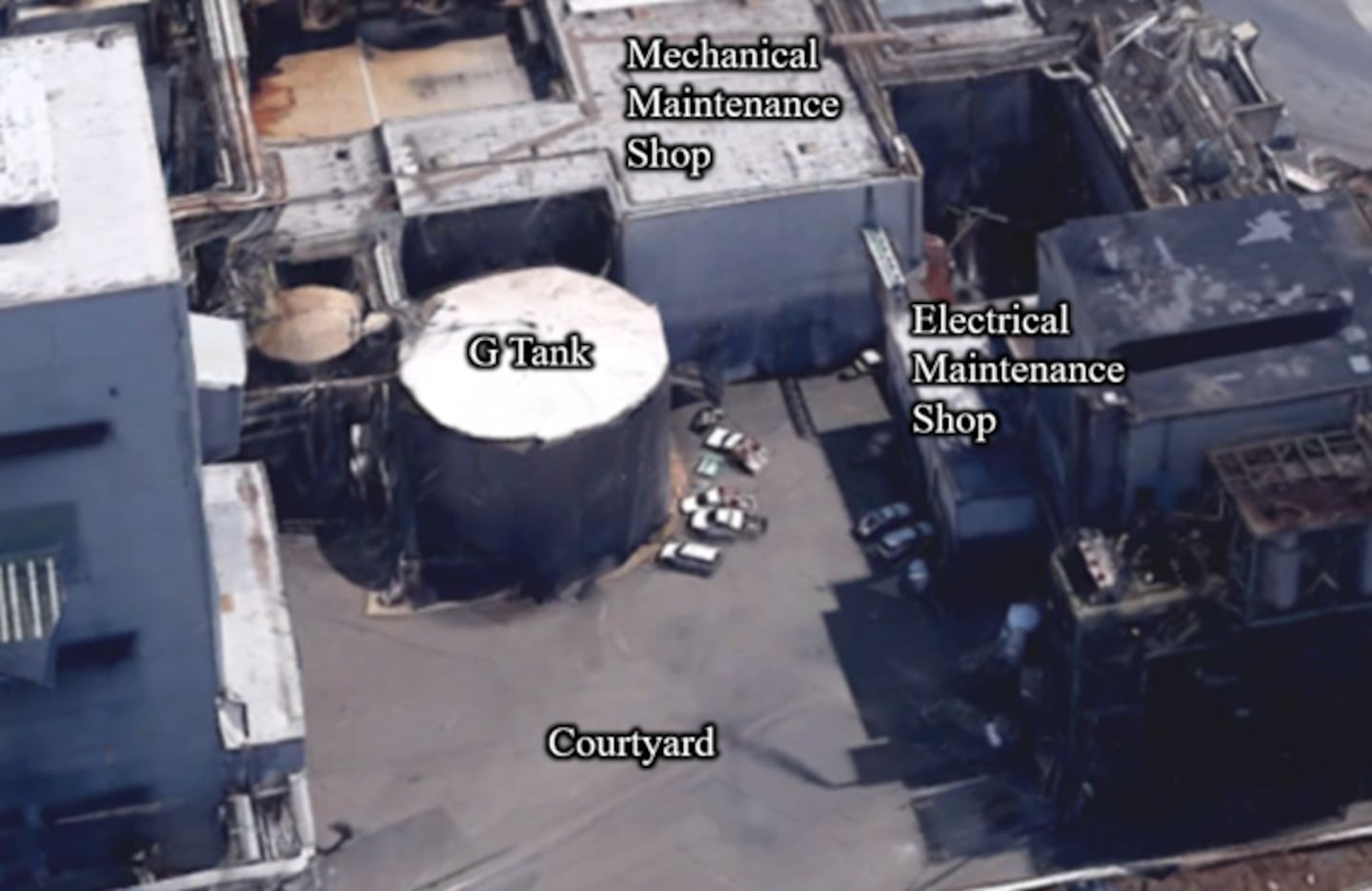
At approximately 7:09 a.m., the tank catastrophically failed, releasing approximately 900,000 gallons of white liquor.
At the time of the tank failure, the report states that 17 employees were present on the ground level:
- Seven maintenance employees and one foreman were in the mechanical maintenance shop
- Eight maintenance employees were in the electrical maintenance shop
- One operator was in the courtyard
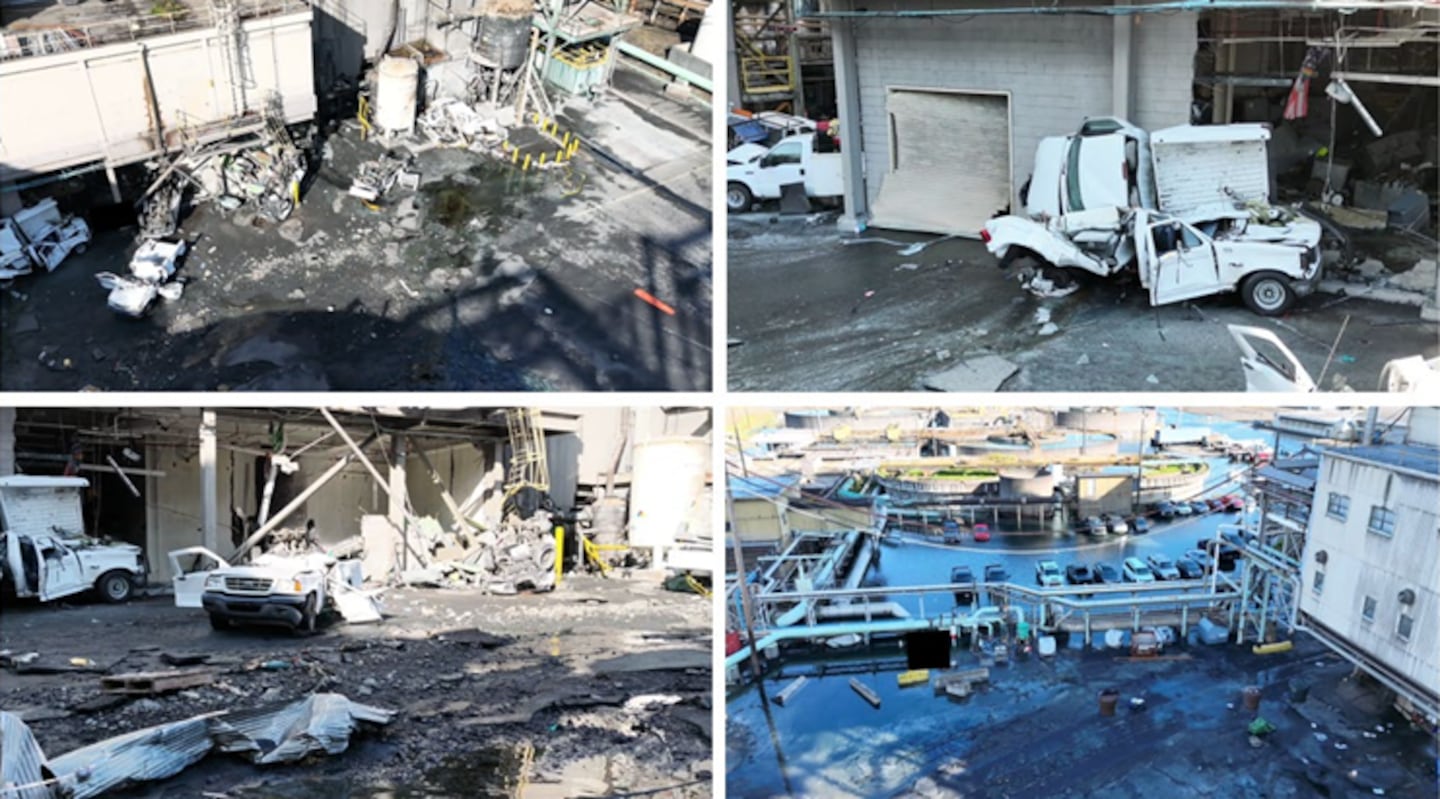
According to the report, most of the tank’s contents were released when it failed, creating a massive “wave” of white liquor that rapidly flooded into the courtyard and towards the buildings.
As the white liquor deluged the courtyard, the force of the moving liquid crushed vehicles and destroyed one of the surrounding buildings’ roll-up doors and one of its walls. The white liquor entered the lower floors of the buildings through door seals.
Injuries and deaths
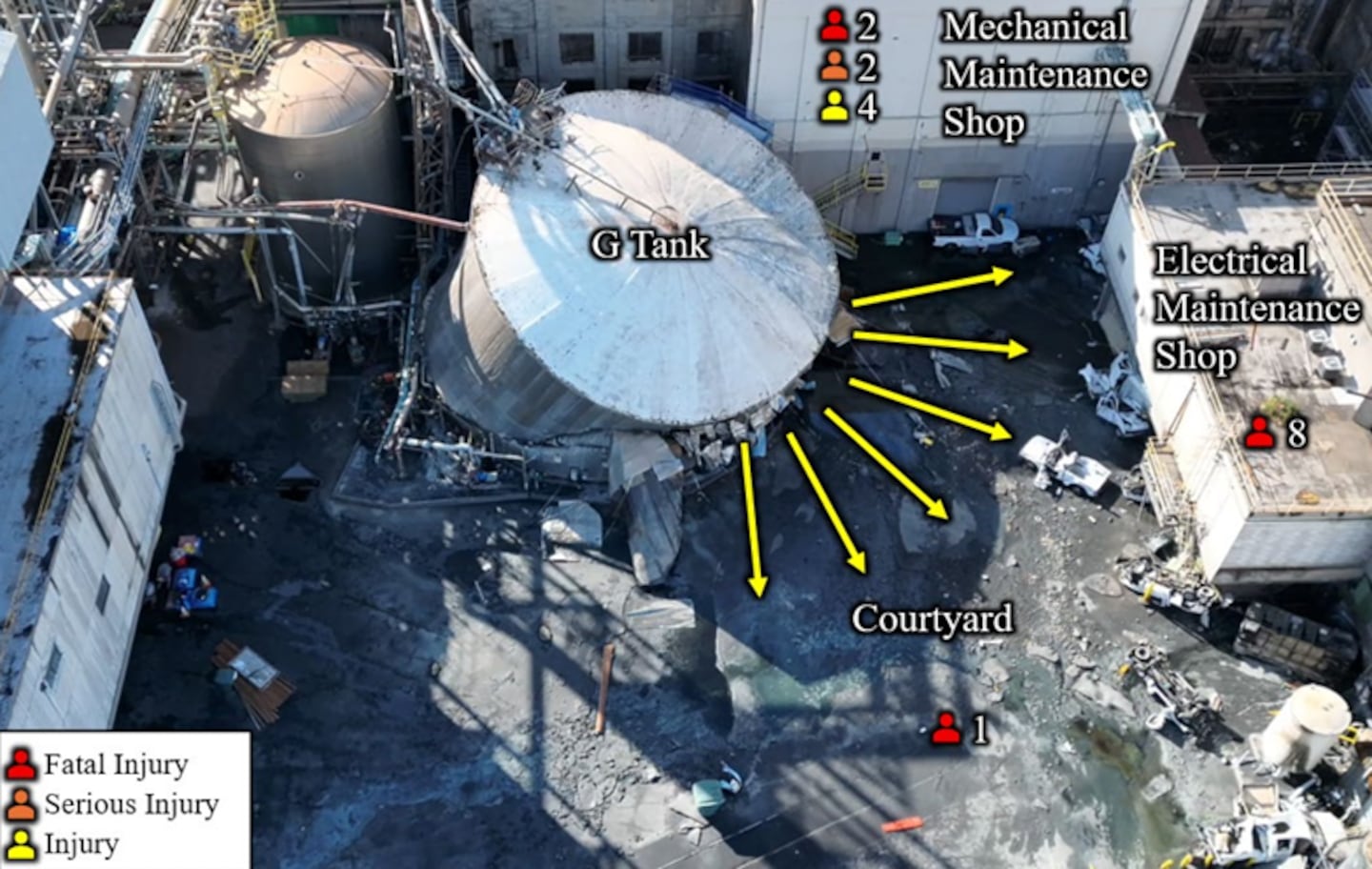
According to the report, the eight employees in the mechanical maintenance shop tried to evacuate. Five of the maintenance employees and the foreman escaped, but the other two employees died from exposure to the white liquor.
Additionally, all eight employees in the electrical maintenance shop and the worker in the courtyard died from exposure to the white liquor.
Of the six workers who escaped from the mechanical maintenance shop, two were seriously injured due to chemical burns.
According to the report, Nippon Dynawave Packaging Company sent out a radio call for its Medical Emergency Response team for help, but did not specify that white liquor had been released.
The report states that response members tried to rescue an employee from a pool of the liquid, thinking it was water, and were chemically burned.
The Cowlitz County Fire Department and Sheriff’s Office also responded to help. During the emergency response, three additional paper mill employees and one Cowlitz County firefighter were hurt but didn’t have to go to the hospital.
According to the report, most of the workers in the control room above the electrical maintenance shop were evacuated by the paper mill’s management team. Three operators remained in the control room to shut down the mill. They were not injured.
Because of the large amount of white liquor that flooded the courtyard and the amount left in the tank, it took four days for crews to safely recover the last body from the site.
Union responds
Josh Estes, spokesperson for the Association of Western Pulp and Paper Workers (AWPPW), sent KIRO 7 a statement about the findings of the investigation:
“The information presented in the Chemical Safety Board’s investigation update is deeply troubling. According to the CSB, NDP received an inspection report months before the May 26 tragedy stating that G Tank was not fit for continued service unless repaired and warning of a high likelihood and consequence of failure. The CSB further reports that the tank remained in normal operation without the recommended internal inspection, repairs, reduced service, or removal from operation.
Eleven of our brothers lost their lives, others were seriously injured, and their families, coworkers and the Longview community continue to carry an immeasurable loss. The update raises urgent questions about how technical findings and recommendations concerning the tank were communicated, evaluated and incorporated into decisions about its continued operation. The families and workforce deserve a complete accounting of that process. AWPPW will not minimize the seriousness of the information released, but we will also not draw conclusions about causation or responsibility beyond what the evidence currently establishes.
This update provides important information, but it does not present the complete picture. It does not yet establish the specific cause or mechanism of the rupture, the complete sequence of contributing factors, or where responsibility ultimately rests. An interim update containing information of this significance will naturally generate difficult questions and speculation when the complete technical analysis is not yet available. We understand the frustration created by the questions that remain unanswered and believe continued communication with the families must remain a priority as additional facts are verified.
The CSB is conducting a separate, nonregulatory federal safety investigation focused on identifying technical causes and contributing factors and developing recommendations intended to prevent similar incidents. The CSB does not issue citations or fines. For workplace-safety compliance in Washington, the Department of Labor and Industries is the lead agency with investigative and enforcement authority. L&I’s investigation will examine the complete record, determine what state workplace-safety requirements applied and decide whether violations occurred.
We appreciate L&I’s commitment to developing a thorough report within its jurisdiction. Its findings will be essential to understanding what happened, establishing responsibility based on the complete evidence and providing the families, workforce and community with the full accounting they deserve. As the investigations clarify the technical facts and applicable requirements, AWPPW will work with elected officials, regulatory bodies and industry partners to evaluate whether additional safeguards or policy changes are needed.
AWPPW has an obligation to ensure workers receive clear information about the condition of the rest of the facility and have a meaningful role in decisions affecting their safety. We expect transparency regarding the assessment of other tanks, vessels and critical equipment, independent verification that immediate safety concerns have been addressed, and direct worker participation throughout the restart process. Constructive engagement must be grounded in evidence, transparency and respect for the experience of the people who operate and maintain this facility.
Accountability and the future of this mill are not competing objectives. AWPPW will not sacrifice accountability to protect these jobs, and we will not abandon this workforce while demanding accountability. We support the timely restoration of safe operations and will continue working with NDP, elected leaders and other partners to secure the mill’s long-term future. A safe restart and a complete investigation can move forward together, but both must be built on verified facts, demonstrated safety and a firm commitment that every worker returns home safely.”
Nippon Dynawave Packaging Co. responds
KIRO 7 News reached out to Nippon Dynawave Packaging Company for comment on the report.
Sam Jefferies, spokesperson for the company, sent the following:
“Nippon Dynawave Packaging appreciates the work of the U.S. Chemical Safety and Hazard Investigation Board and its contributions to promoting safe industrial standards and practices. We share the CSB’s commitment to a thorough, independent determination of what occurred on May 26, and to establishing a complete factual record that can help prevent future tragedies.
The CSB’s investigative update provides an initial update rather than a complete determination of the facts or conclusions, and it is not a final determination of cause. NDP will carefully consider the update and all information developed as the investigation proceeds, and will continue to cooperate fully with the CSB and all other relevant authorities.
We appreciate the opportunity to share information with the CSB investigative team, and we look forward to providing additional data as the CSB continues its work and publishes future reports. We believe the responsible course is to allow the full investigative process to proceed and establish a complete and accurate record before conclusions are reached. Because the investigation remains ongoing, we will not comment on individual findings or documents at this time.
Our focus remains on supporting affected families and employees and taking the necessary steps toward fully reopening the Longview facility."
What’s next?
The investigation is ongoing. CSB says complete findings, analyses, and recommendations, if appropriate, will be detailed in its final investigation report. No word on when that could be released.
Nippon Dynawave Packaging Company will continue paying full salaries to workers impacted by the implosion through October 11.
According to a news release from the Association of Western Pulp and Paper Workers (AWPPW), it was set to expire in August but the company chose to extend it in July.
©2026 Cox Media Group