PHOTOS: Fires devastated Seattle, Ellensburg, Spokane in 1889
Image 0 of 15
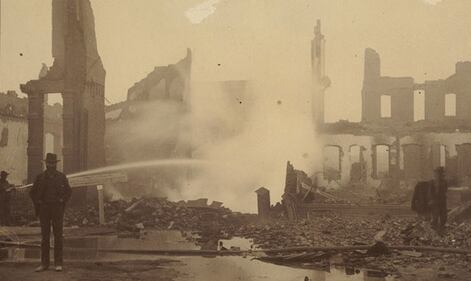
Fires devastated Seattle, Ellensburg, Spokane in 1889 Spokane’s Hyde Block, shown the day after the devastating fire of August 4, 1889. (Northwest Museum of Arts & Culture)
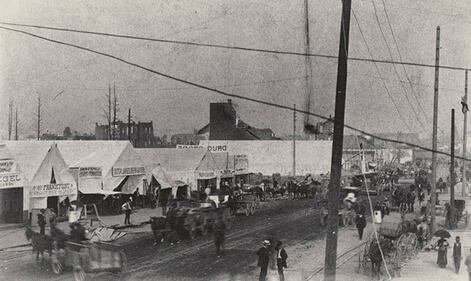
Fires devastated Seattle, Ellensburg, Spokane in 1889 The hot and dry summer of 1889 was followed by the bitterly cold winter of 1889-1890; Spokane, like Seattle, built tent cities of temporary homes and businesses that somehow weathered the storms and survived the deep freeze. (Northwest Museum of Arts & Culture)
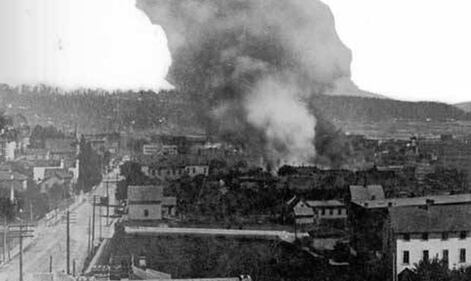
Fires devastated Seattle, Ellensburg, Spokane in 1889 This photo was taken from the roof of a building at Pike Street and Second Avenue in mid-afternoon on June 6, 1889, about 45 minutes after the fire started. By nightfall, most of Seattle's business district had been destroyed. (MOHAI)
Fires devastated Seattle, Ellensburg, Spokane in 1889 The Great Seattle Fire was photographed not long after it started on the warm and windy afternoon of June 6, 1889. (City of Seattle Municipal Archives)
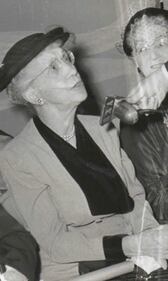
Fires devastated Seattle, Ellensburg, Spokane in 1889 This unidentified woman, believed to be Seattle socialite Mrs. Rollin Sanford, born Kate McGraw, daughter of Washington’s second Governor John McGraw, was a young girl when she witnessed the Great Seattle Fire of June 6, 1889. She was recorded talking about her memories more than 60 years later at the old MOHAI in Montlake in February 1953. (MOHAI)
Fires devastated Seattle, Ellensburg, Spokane in 1889 The Ellensburg fire is said to have began in J.S. Anthony’s grocery store, which was located on the east side of Main Street between 4th Avenue and 5th Avenue. The cause of the fire has never been determined. (Henry Jennings)
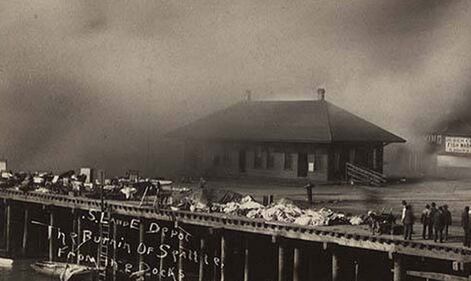
Fires devastated Seattle, Ellensburg, Spokane in 1889 The Great Seattle Fire of June 6, 1889 was a significant turning point in the city’s history and changed both the physical and political landscapes. In this image goods are piled on the dock while spectators watch the fire in progress near the Seattle, Lakeshore & Eastern Railway depot. (MOHAI)
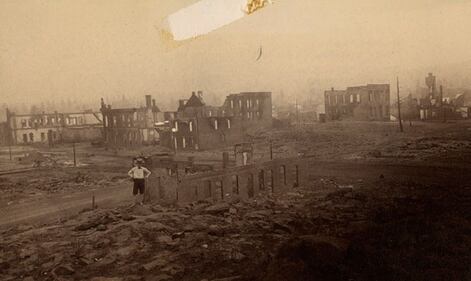
Fires devastated Seattle, Ellensburg, Spokane in 1889 The Masonic Temple, located on the northwest corner of Fourth Avenue and Pine Street (photo looks to the northwest with Fourth Avenue on left and Pine Street on right), after the Great Fire of Ellensburg of July 4, 1889. While the Masonic Lodge had been in existence in Ellensburg since 1882, the Temple was built in early 1889. (Kittitas County Historical Museum)
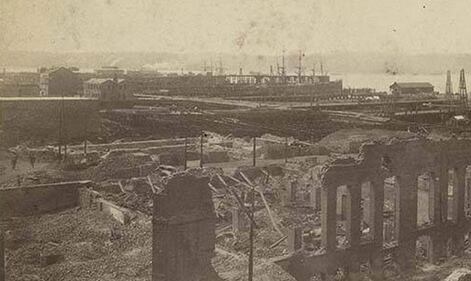
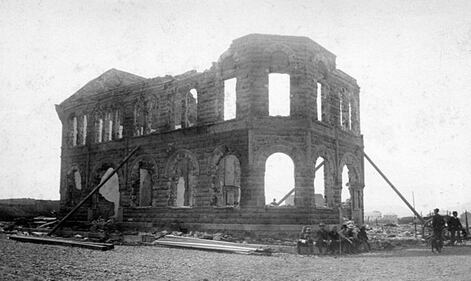
Fires devastated Seattle, Ellensburg, Spokane in 1889 This image shows what remained of a brick building after the Great Seattle Fire of June 6, 1889. The photographer was facing west, and the waterfront is visible in the background. (MOHAI)
Fires devastated Seattle, Ellensburg, Spokane in 1889 Spokane’s great fire struck on Sunday, August 4, 1889. This view is from Front Street looking south. (Northwest Museum of Arts & Culture)
Fires devastated Seattle, Ellensburg, Spokane in 1889 MOHAI dedicated its famous Great Seattle Fire mural, painted by local artist Rudolph Zallinger, at a public celebration in February 1953. (MOHAI)
Fires devastated Seattle, Ellensburg, Spokane in 1889 This is a scene of the Great Fire of Ellensburg, looking north on Pearl Street from 2nd Avenue. The undamaged building with the onion-shaped finials is the Lynch Block (also known as the 1888 Building), which was one of five downtown buildings that survived the fire and which is the only one still standing. (Kittitas County Historical Museum)
Fires devastated Seattle, Ellensburg, Spokane in 1889 Ben E. Snipes Bank & Co. building located on the southeast corner of Fourth Avenue and Pearl Street (photo looks to the southeast with Fourth Avenue on left and Pearl Street on right). Ben E. Snipes had been a cattle baron and used his fortune to finance a bank that had been built in 1888; one branch in Ellensburg and one in Roslyn. After this, he rebuilt the bank, changing the design slightly but using the same stonework. (Kittitas County Historical Museum)