NORTH BEND, Wash. — A small earthquake near North Bend Thursday morning offered Western Washington a timely reminder of the region’s seismic risk, hours before people are expected to participate in a major earthquake preparedness drill.
The U.S. Geological Survey recorded the magnitude 2.7 earthquake Thursday morning about 5 kilometers southwest of Wilderness Rim.
It comes just before the annual Great ShakeOut. The drill is part of a worldwide earthquake preparedness effort designed to give people a chance to practice what they should do when the ground starts shaking: drop, cover, and hold on.
Washington emergency officials say practicing ahead of time can help people react more quickly during an actual earthquake.
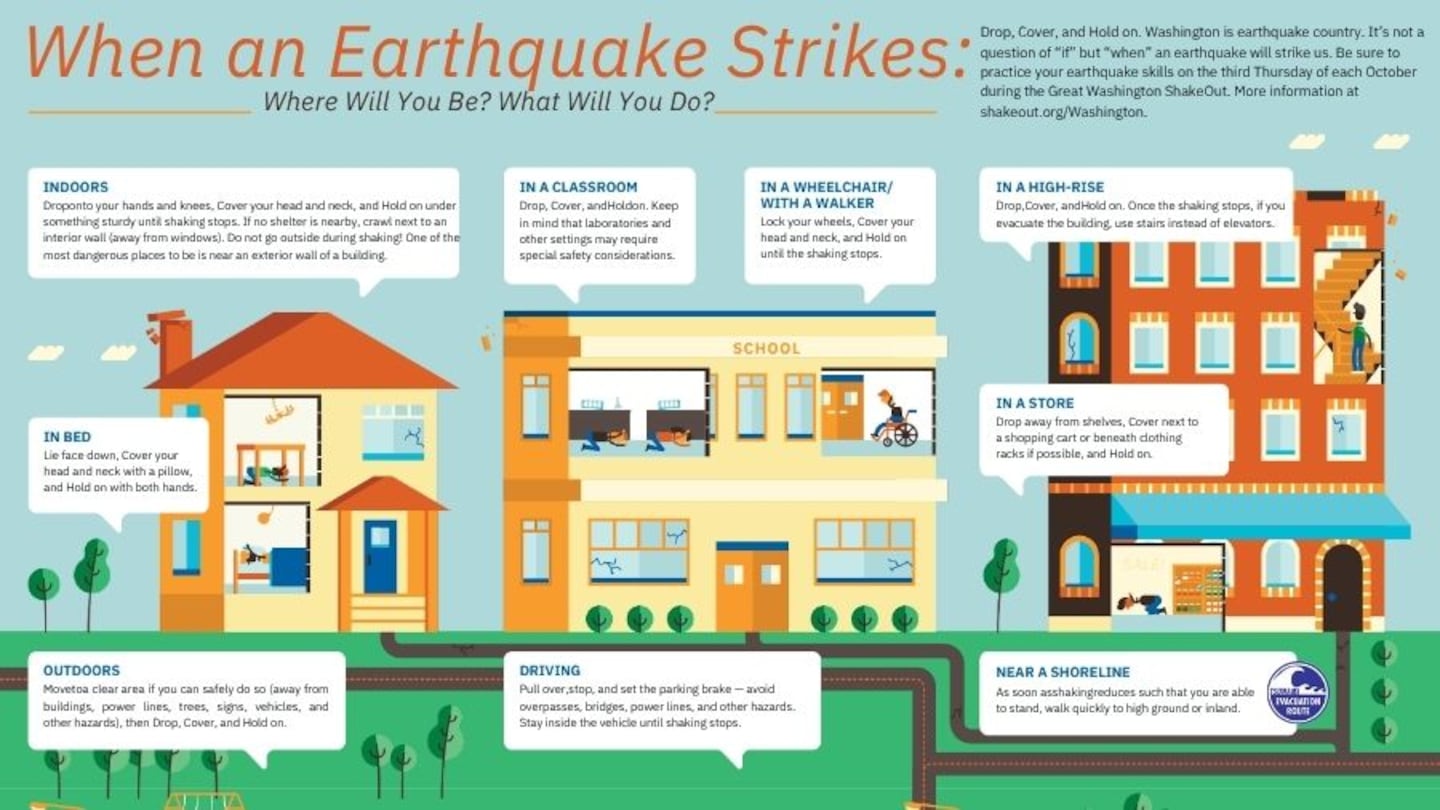
What should you do during an earthquake?
If you are indoors, emergency officials recommend dropping to your hands and knees, covering your head and neck and, when possible, getting underneath a sturdy desk or table. Then hold on until the shaking stops. If there is no sturdy shelter nearby, protect your head and neck and move away from windows, glass, and objects that could fall.
If you are outside, move away from buildings and other objects that could fall and stay in an open area until the shaking stops.
Experts also recommend thinking before an earthquake about where you might be when one strikes, including at home, work, school, or in the car. Keep kits in these places.
Building an earthquake kit
Preparing also means having enough emergency supplies to get through the aftermath of an earthquake.
Experts tell KIRO 7 that earthquake kits do not need to be complicated.
Check out this checklist and consider including the following supplies:
- Non-perishable food and water (one gallon per person, per day)
- A battery-powered radio
- Flashlight
- Batteries
- Portable chargers
- First-aid kit
- Whistle
- Dust maks
- Garbage bags
- Plastic ties and tools (including a wrench or pliers to shut off utilities and a can opener for food)
- Local maps (internet services and communication channels can drop after a major earthquake)
- Prescription medications
- Soap and sanitizer
- Supplies for your infant or pet
- Contact lenses
Families can consider keeping emergency supplies in multiple places, including at home, at work, and in their vehicles, since there is no way to know where they will be when an earthquake strikes.
©2026 Cox Media Group