Under Senate Bill HR 1, as of October 1, more than 100,000 Washington residents may no longer be eligible for government healthcare when they reenroll.
But that is not all.
According to a presentation by Carla Reyes, assistant secretary at the Washington Department of Social and Health Services, 126,000 people could lose access to the food assistance program if they fail to meet the new work requirements.
According to state data, roughly a third of people who use SNAP benefits are children.
The state has also predicted that most households that use SNAP will see a reduction in their benefits, even if they are allowed to keep some form of aid.
Under the bill, the ages at which people must keep working to maintain access to SNAP and other programs were raised by a decade to 64. Before the bill took effect, the upper limit for work requirements was 54.
The bill also requires parents with children older than 14 to return to work. Prior to the bill, exceptions for work requirements existed for veterans, people experiencing homelessness, and those 24 years old or younger. Now, those exceptions are gone.
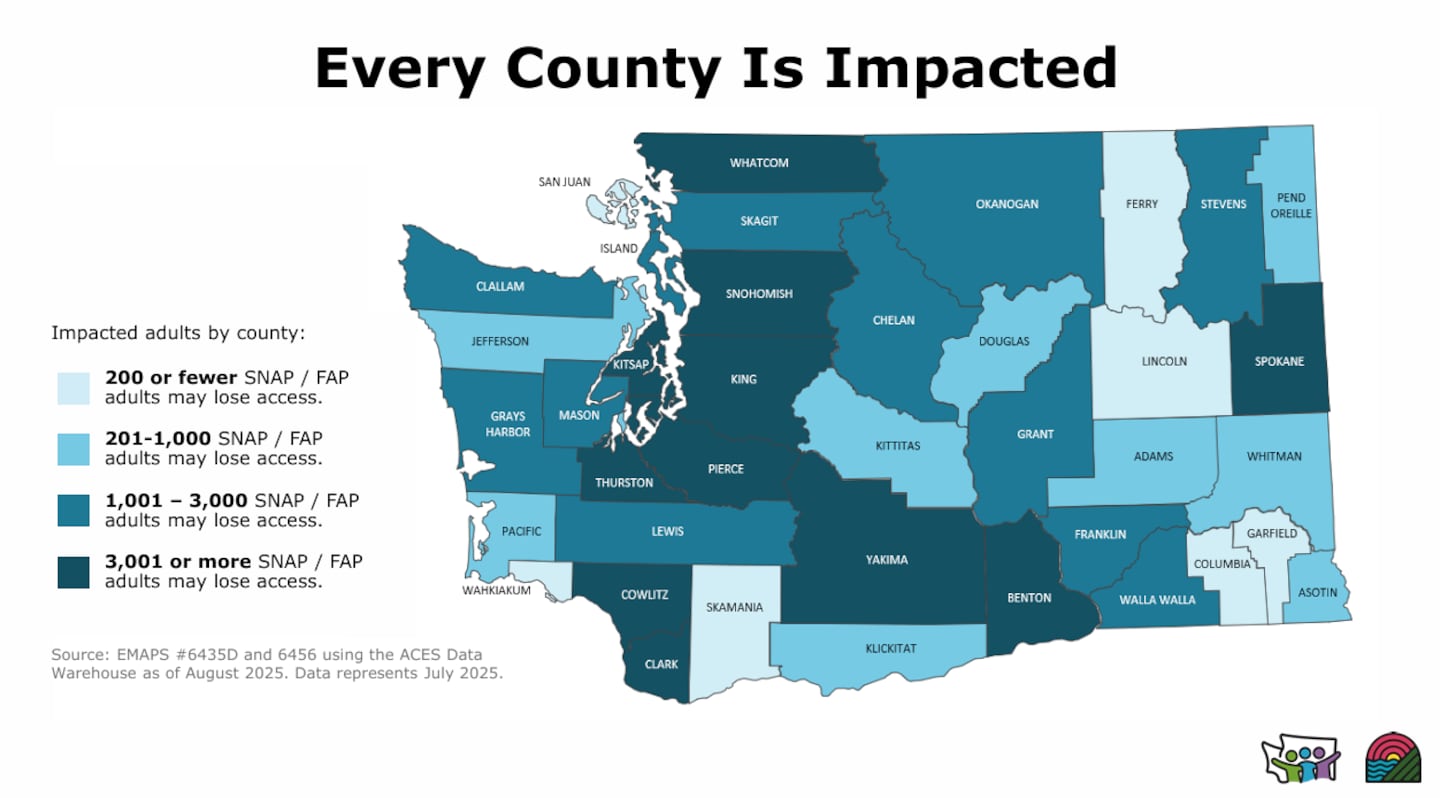
State estimates that 3,000 or more adults in King County alone may lose access to SNAP or other food assistance benefits they relied on before the bill took effect.
One of the communities most impacted by the bill is immigrants. Under HR 1, SNAP benefits for immigrants are essentially ended for refugees, immigrants from certain countries, and people seeking asylum.
In a statement published this summer, King County noted that Non-citizen adults 19 years and older were disqualified from Apple Health, Washington State’s healthcare system, and Medicaid on Friday.
By October 8, the county said Medicaid recipients can expect to start paying a $35 copay for many services; the county said this would not apply to services from the Public Health Center or community health centers.
Looking ahead to the new year, the county says that by January 1, Medicaid recipients should expect their eligibility to be checked every 6 months, and retroactive coverage periods for children and pregnant people will be reduced to two months.
©2026 Cox Media Group