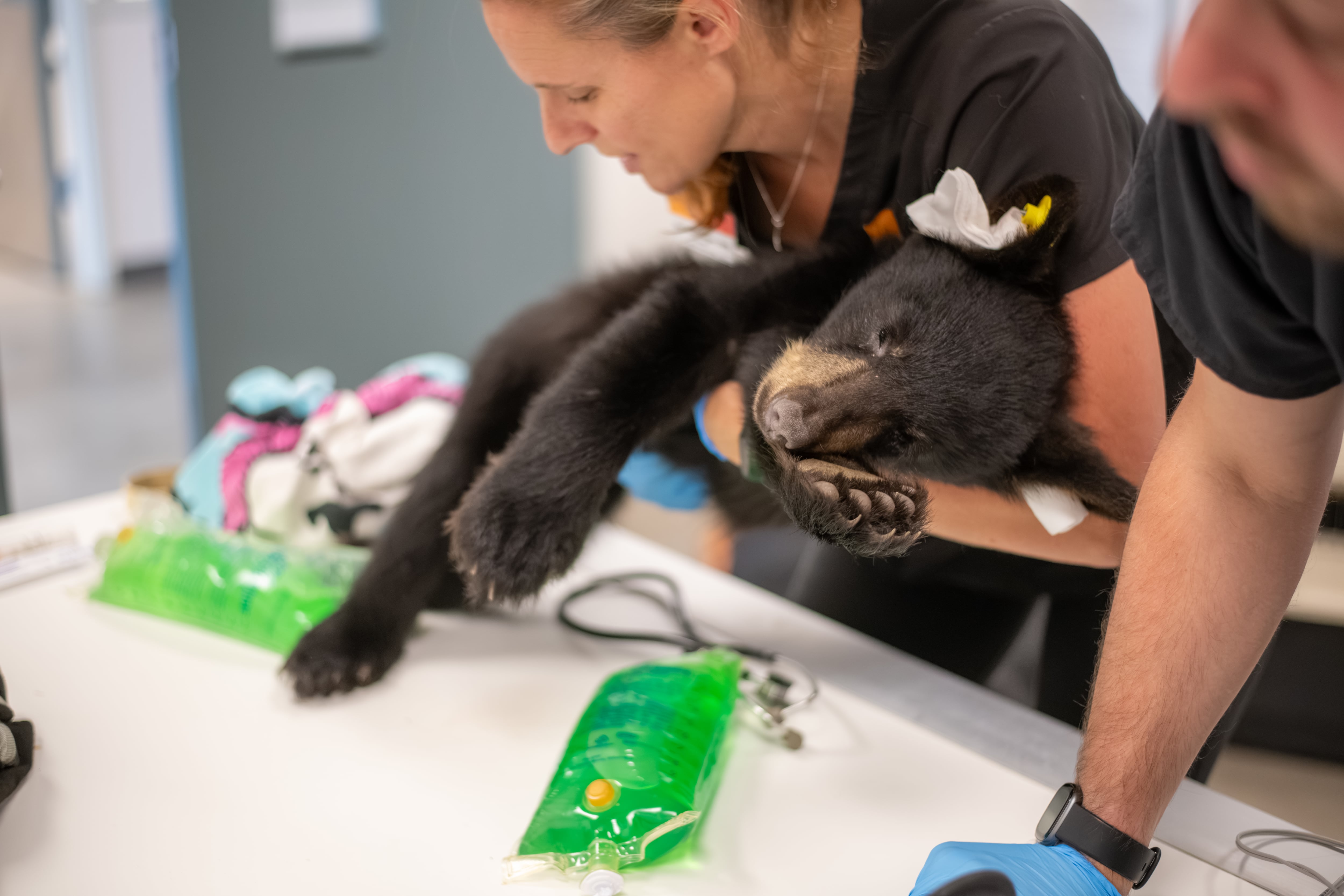


SNOHOMISH, Wash. — Eight American black bears have been released back into the wild after spending months at the Progressive Animal Welfare Society (PAWS) Wildlife Rehabilitation Center in Snohomish, marking a major milestone during what staff describe as an unusually busy year for bear rehabilitation.
The wildlife center has cared for 17 black bears so far this year, far surpassing its typical annual intake of four to five bears. Eight of those bears arrived within the last month alone, according to PAWS.
The organization said the successful releases were made possible through months of specialized care and an outpouring of community support.
“As each bear arrived, our team was averaging 175 pounds of food per day,” said Emily Meredith, associate director of the Wildlife Rehabilitation Center. “That highlights the amount of food and specialized care required, the importance of community response, and what it means to see the bears return to the wild.”
Young black bears require extensive resources while in rehabilitation. PAWS staff said growing cubs need large amounts of food each day, space to roam, enrichment activities, and minimal human interaction to help preserve the instincts they’ll need to survive after release.
Earlier this fall, PAWS asked the public to help replenish its food supply as the number of bears in care climbed. The response brought in more than 10,000 pounds of donated food, including vegetables and fish, along with gift cards and cash donations to help feed the animals.
The increase in bear admissions has also raised questions about what may be driving more bears into situations where they need human intervention.
According to PAWS, changing environmental conditions such as drought, declining snowpack, and shifting seasonal weather patterns may be affecting natural food sources for black bears across Washington. Huckleberries, a critical late-season food source for bears in the Pacific Northwest, have been especially scarce in some areas this year.
When natural food becomes harder to find, bears may travel farther in search of meals, sometimes venturing into neighborhoods where garbage, bird feeders, pet food, and fallen fruit can attract them.
PAWS wildlife biologist Anthony Denice said food scarcity may be one factor contributing to the increase in bears requiring rehabilitation.
“When bears struggle to find enough food in their natural habitat, they’re more likely to seek food near people,” Denice said. “While we can’t attribute every orphaned cub to food scarcity, changing environmental conditions may be one contributing factor to the increased number of bears needing help.”
PAWS works with the Washington Department of Fish and Wildlife to determine when and where rehabilitated bears should be released. Each animal is evaluated individually to ensure it is ready to return to its natural habitat.
While eight bears have now been released, nine remain in PAWS’ care.
As winter approaches, rehabilitation staff are shifting their focus toward preparing the remaining bears for denning season. Once the animals build enough fat reserves, food is gradually reduced to mirror natural conditions in the wild.
The bears are provided quiet, dark dens with natural bedding while staff minimize disturbances to encourage natural winter behaviors. Although black bears do not remain asleep throughout the winter, they typically become far less active and spend much of the season resting.
PAWS expects the remaining bears could be released next spring once they are ready to survive on their own.
The center’s work extends beyond bears. Staff, interns, and volunteers are also caring for a juvenile bobcat, juvenile bald eagles, and an adult great-horned owl, each requiring specialized diets and rehabilitation plans.
“Every successful release represents countless hours of work by our team and the support of a community that believes wild animals deserve a chance to return home,” Meredith said. “We’re incredibly grateful to everyone who helped us care for these bears, and we’re continuing that work for the animals who still need us.”
PAWS said it is still accepting limited donations, including grocery gift cards and bear-friendly foods such as sweet peppers, broccoli, cauliflower, cucumbers, bananas, and berries. Due to storage limitations, the organization said it can only accept about 40 to 50 pounds of food donations each week.
©2026 Cox Media Group